
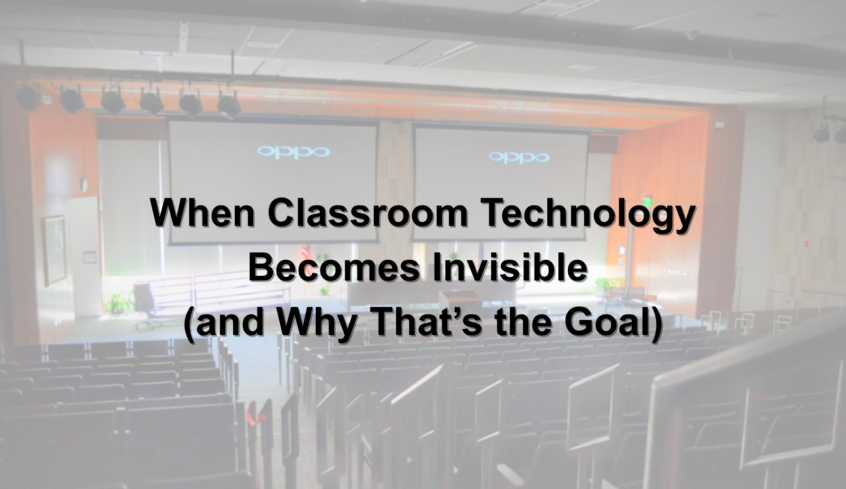
Walk into a great classroom and you’ll notice the teaching, not the technology.
That’s not an accident. In the most effective learning environments, audio visual systems fade into the background, allowing instructors and students to focus entirely on engagement, discussion, and learning outcomes. When AV works the way it should, it becomes invisible.
Why “Invisible” AV Matters in Education
Instructors shouldn’t have to troubleshoot microphones, displays, or control panels before every class. When classroom AV systems are intuitive and reliable, they remove friction instead of creating it.
Invisible AV means:
- Classes start on time
- Lessons flow naturally
- Instructors teach with confidence
- Students stay focused instead of distracted by technical issues
When technology interrupts learning, even briefly, it breaks momentum. Over time, those interruptions add up.
The Hidden Cost of Complicated Classroom Technology
Many schools invest in advanced AV equipment but overlook usability and consistency. The result is often:
- Faculty avoiding certain features entirely
- Increased support tickets mid-semester
- Workarounds that limit system capabilities
- Frustration for both instructors and IT teams
If a system requires training just to complete everyday tasks, it’s not supporting education — it’s slowing it down.
Designing AV Around Real Classroom Behavior
Effective educational AV design starts with understanding how instructors actually teach.
That means accounting for:
- Different teaching styles
- Movement throughout the room
- Hybrid and recording needs
- Varying levels of technical comfort
Instead of forcing instructors to adapt to technology, the technology should adapt to them. Simple controls, consistent layouts across classrooms, and dependable audio are what make systems feel effortless.
Invisible AV Still Requires Thoughtful Design
Invisible doesn’t mean minimal, it means intentional.
Behind the scenes, invisible classroom AV depends on:
- Proper room acoustics
- Strategic microphone placement
- Reliable network integration
- Standardized system design across campus
- Ongoing maintenance and support
When these elements are planned together, technology works quietly in the background — exactly where it belongs.
The Goal: Technology That Supports Learning, Not Disrupts It
The best AV systems don’t draw attention to themselves. They simply work- day after day, class after class.
For educational environments, success isn’t measured by how advanced the technology looks, but by how seamlessly it supports teaching and learning.
When classroom technology becomes invisible, education stays front and center.