
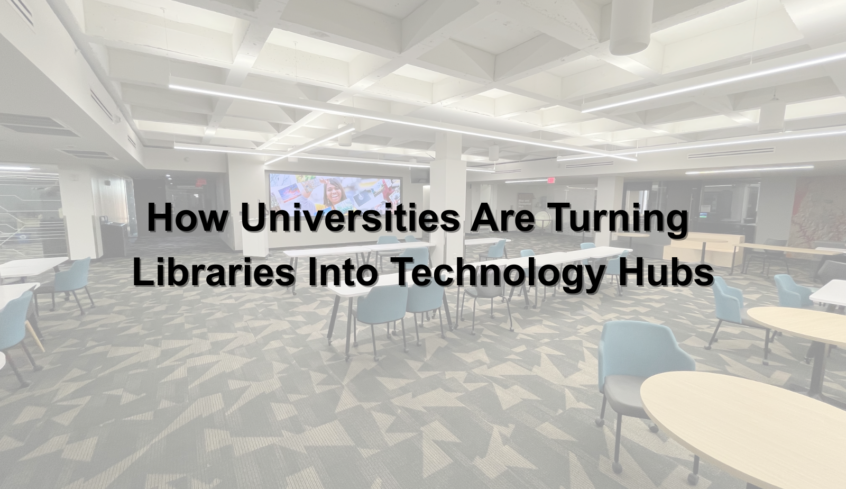
For generations, university libraries were known as quiet places filled with shelves of books, study tables, and the occasional whispered conversation. While those traditional elements still exist, the role of the library on modern campuses has evolved dramatically.
Today’s university libraries are becoming dynamic technology hubs- spaces designed to support collaboration, digital learning, research, and innovation. As education continues to evolve, universities are reimagining their libraries as flexible environments where students can gather, create, and connect using advanced technology.
From Silent Study to Collaborative Spaces
While quiet study areas are still important, many universities are transforming large portions of their libraries into collaborative learning spaces. Students now work together on group projects, presentations, and research that often rely on shared digital tools.
To support these activities, libraries are incorporating technology such as:
- Large-format displays for group collaboration
- Wireless screen sharing for easy presentations
- Video conferencing tools for remote teamwork
- Integrated control systems that simplify room operation
These tools make it easier for students to move seamlessly between discussion, research, and presentation.
Supporting Digital Learning
Education today is more digital than ever. From online research databases to virtual classrooms, students rely on technology to access information and complete coursework.
Libraries are adapting by integrating technology that supports modern learning styles. Digital displays, interactive screens, and media collaboration tools allow students to engage with content in ways that go beyond traditional textbooks.
In many cases, libraries also serve as spaces where students can access technology they may not have at home, helping ensure equal access to digital resources.
Creating Engaging Campus Environments
Technology is also helping libraries become more visually engaging and informative spaces. Video walls, digital signage, and interactive displays are increasingly used to share campus announcements, promote events, and provide wayfinding assistance for visitors.
These technologies transform libraries into more than just study spaces, they become central hubs of campus activity where information, communication, and collaboration come together.
Designing Spaces for Flexibility
One of the most important aspects of modern library design is flexibility. Universities need spaces that can adapt to changing technology and evolving student needs.
Integrated audiovisual systems allow rooms to serve multiple purposes, from quiet study and group collaboration to presentations, workshops, and events. With intuitive controls and thoughtfully designed infrastructure, these spaces can easily support a variety of activities throughout the day.
The Library’s Role in the Future of Education
University libraries are no longer just repositories of information. They are becoming centers of innovation and collaboration, where technology supports the way students learn, communicate, and create.
By integrating modern AV solutions, universities can transform traditional libraries into environments that foster creativity, collaboration, and discovery.
As campuses continue to evolve, libraries will remain at the heart of the academic experience, now enhanced by technology that empowers students and educators alike.