
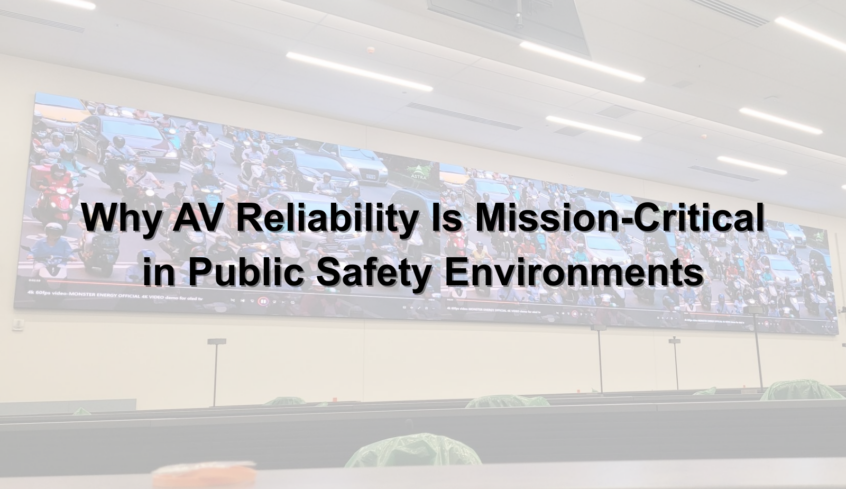
Technology is expected to perform flawlessly under pressure in public safety environments. Whether coordinating emergency response, monitoring live data, or managing multi-agency communication, audiovisual systems play a foundational role in how information is shared and decisions are made. When AV systems are unreliable, the impact is immediate- affecting response time, coordination, and situational awareness when it matters most.
Public Safety Depends on Clear, Real-Time Communication
Public safety teams rely on accurate, real-time information to respond effectively. AV systems support this by delivering live video feeds, shared data, dispatch communications, mapping systems, and interagency collaboration tools.
When audio drops, displays go dark, or systems lag, it creates delays, confusion, and unnecessary risk. In high-pressure situations, even small technical issues can disrupt workflows and slow response times.
Reliable AV systems ensure:
- Clear audio intelligibility across command and dispatch spaces
- Continuous visibility of critical data and live feeds
- Seamless communication between agencies and departments
- Faster, more informed decision-making
Downtime Is Not an Option
Unlike corporate or commercial spaces, public safety facilities often operate 24/7. AV systems must perform consistently without interruption, regardless of time, usage, or environmental conditions.
Unplanned downtime in a public safety environment can:
- Delay emergency response efforts
- Interrupt coordination between agencies
- Reduce situational awareness
- Undermine trust in the technology
Reliability isn’t just about preventing failures, it’s about ensuring systems are designed, supported, and maintained to function under constant demand.
Designing for Reliability Starts at the Beginning
AV reliability begins long before installation. Proper system design is essential to ensure long-term performance. This includes thoughtful equipment selection, redundancy planning, network integration, and clear system architecture.
Public safety AV systems must be:
- Designed for continuous use
- Scalable for future growth
- Integrated with existing IT, CAD, and data systems
- Easy to monitor and troubleshoot
When systems are designed with reliability in mind, issues are easier to identify and resolve quickly.
The Role of Proactive Support and Diagnostics
Even the best-designed systems require ongoing support. Preventative maintenance, system monitoring, and rapid diagnostics help identify potential issues before they impact operations.
A proactive support strategy reduces emergency service calls, extends equipment lifespan, and ensures systems remain dependable over time. For public safety teams, this level of support provides confidence that technology will perform when it’s needed most.
Trust Is Built Through Consistent Performance
In public safety environments, trust in technology is essential. When AV systems consistently perform as expected, teams are more likely to rely on them fully — improving collaboration, efficiency, and outcomes.
Reliable AV systems don’t call attention to themselves. They work quietly in the background, supporting the mission without distraction.
Reliability Is a Responsibility
Public safety facilities require AV solutions that are designed, integrated, and supported with reliability as the top priority. It’s not just about equipment — it’s about protecting communication, coordination, and the people who depend on them.
At TPI, we understand the unique demands of public safety environments. Our approach to AV integration emphasizes reliability, clarity, and long-term performance, because when the mission is critical, the technology must be too.