
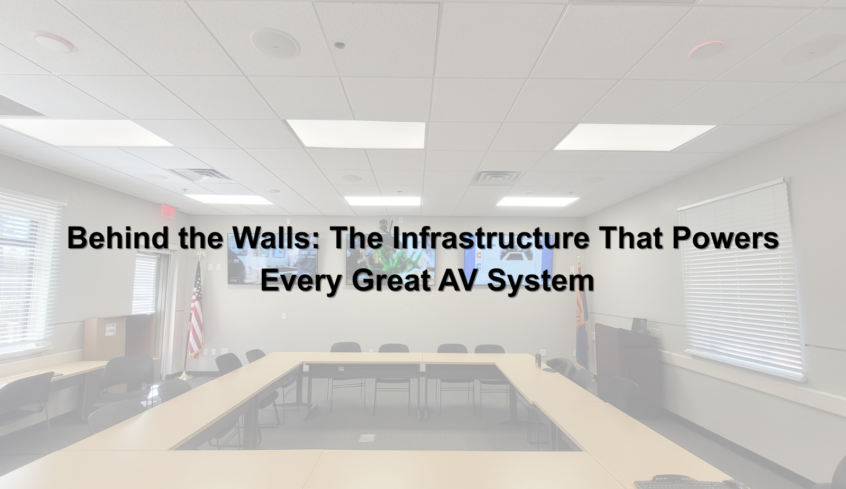
When people walk into a conference room, lecture hall, courtroom, or operations center, their attention naturally goes to the technology they can see.
The displays are bright. The speakers are clear. Meetings start with the touch of a button. Everything simply works.
What most people never see is the infrastructure behind the scenes that makes that experience possible.
Behind every successful AV system is careful planning, organized cable management, equipment racks, programming, and countless hours of engineering. While these components may be hidden away in closets, cabinets, or dedicated equipment rooms, they’re often the most important part of the entire system.
The Rack Room: The Heart of the System
Think of a rack room as the control center for your AV technology.
This is where much of the equipment that powers your meeting rooms, classrooms, and public spaces is housed. Rather than placing devices throughout a building, many organizations centralize equipment into professionally designed racks that make systems easier to manage, maintain, and expand.
Depending on the project, a rack may include:
- Audio processors
- Network switches
- Amplifiers
- Control processors
- Video distribution equipment
- Power management
- Streaming devices
- Servers
By keeping equipment organized in one location, technicians can troubleshoot issues more efficiently while reducing clutter throughout the building.
Why Cable Management Matters
Few things are more overlooked than cable management, but it’s one of the biggest indicators of a well-designed installation.
Professional cable management isn’t just about making a rack look clean. Organized cabling improves airflow, reduces wear on equipment, simplifies future maintenance, and makes upgrades much easier years down the road.
A neatly organized rack allows technicians to quickly identify connections, replace equipment when needed, and minimize downtime.
Good cable management is an investment in long-term reliability.
Good Design Makes Technology Feel Simple
When someone walks into a meeting room and everything works exactly as expected, they rarely think about the engineering behind it.
That’s actually the goal.
A successful AV system feels intuitive because hundreds of design decisions have already been made. Equipment has been selected for compatibility, cables have been carefully routed, systems have been programmed to communicate with one another, and every component has been tested before the space is ever occupied.
The easier technology feels to use, the more work likely happened behind the scenes.
Planning for the Future
A well-designed AV system isn’t built only for today’s needs.
It should also be ready for tomorrow.
Whether an organization wants to add displays, expand collaboration spaces, upgrade conferencing platforms, or integrate new technologies, thoughtful infrastructure makes those changes far easier.
Leaving room for growth today can help avoid major renovations tomorrow.
It’s More Than Equipment
Anyone can purchase displays or speakers.
What separates a successful AV project is how those pieces work together as one complete system.
That requires thoughtful engineering, organized infrastructure, and attention to every detail—many of which remain completely invisible once the project is finished.
The TPI Difference
At Technology Providers Inc., we know that great AV isn’t defined by what people see, it’s defined by what they never have to think about.
From professionally designed rack rooms and meticulous cable management to programming, commissioning, and long-term support, we build systems that are designed to perform reliably for years to come.
Because when the foundation is built right, everything else simply works.